
Scale your ebook collection with ease
Publisher Collections is an innovative Books at JSTOR model designed with academic libraries and publishers, and built to simplify workflows and lower operational burden for libraries while broadening access to knowledge in equitable and scalable ways.
22
Publishers
~1,545
Titles per collection
~53%+
Lower cost for current-year titles
A mission-driven, nonprofit led model
Publisher Collections offers a new way to acquire and access high-quality scholarly ebook collections from trusted academic publishers, with a growing list of 22 participating presses.
Each publisher collection includes:
- A perpetual JSTOR license to current year title sets from a publisher
- Access to all of the publishers’ backlist titles on JSTOR for active participants
- An equitable, tiered fee structure based on your institution’s JSTOR classification
What Publisher Collections do:
- Make ebook access more equitable for institutions of all sizes worldwide
- Simplify library workflows with automated holdings in Alma, availability in discovery systems, and acquisitions through JSTOR, GOBI Library Solutions/Mosaic, or select local subscription agents
- Support researchers by making ebooks fully searchable alongside scholarly journals, primary sources, images, and multimedia on JSTOR
- Advance open access (OA) by partnering with 100% of publishers committed to making scholarly books freely available worldwide, with 1,600+ of their OA titles on JSTOR
- Secure long-term preservation of ebooks via Portico
- Help publishers and authors reach a global audience
Our publishing partners
Explore our growing list of 20+ collections from these participating presses:
Berghahn Books
Cornell University Press
Duke University Press
Fordham University Press
Indiana University Press
Leuven University Press
Liverpool University Press
NYU Press
Pluto Books
SUNY Press
Syracuse University Press
University of Arizona Press
University of Illinois Press
University of Nebraska Press
University of North Carolina Press
University of South Carolina Press
University of Utah Press
University of Wisconsin Press
University Press of Florida
University Press of Kansas
University Press of Kentucky
University Press of Mississippi
Community voices

The most compelling part of Publisher Collections is that it directly addresses the challenges libraries are facing.

As longtime partners, Indiana University Press values the nonprofit, non-commercial ethos that JSTOR brings to the table in the current library market environment.

When JSTOR approached us with an offer to participate in their new Publisher Collections program, we saw it as an opportunity to offer libraries more choices. We were impressed with the care, collaboration, and commitment they brought to construct a solution that benefits both publishers and libraries.

This initiative has been carefully designed to meet the needs of both libraries and presses, and should result in a significant expansion in the accessibility of our scholarship for students, researchers, and institutions.

I appreciate that JSTOR consulted with libraries and university presses on the design of Publisher Collections, ensuring that the program is based on our shared values—including transparency, support for trustworthy knowledge creation and dissemination, and responsible stewardship of our institutions’ resources. It’s exciting to know that this program will increase the number of unlimited, DRM-free ebooks available and provide greater access to the materials to libraries around the world.
Collaborating to build a sustainable future for scholarly books

A new model for scholarly ebooks: Publisher Collections built with, and for, librarians and publishers, to serve readers today and tomorrow
A new nonprofit-led model from JSTOR offers libraries and publishers a more sustainable, equitable, and integrated ecosystem for scholarly ebooks.

Books at JSTOR: Our commitment to supporting community-driven, flexible, and sustainable business models
Since 2012, Books at JSTOR has expanded to include over 146,000 scholarly ebooks from 345 global publishers, supporting diverse library needs through flexible acquisition models like Demand Driven Acquisition (DDA) and Evidence Based Acquisition (EBA).
Publisher Collections: A community-driven model for scholarly ebooks
This Library Journal webinar featured the Big Ten Academic Alliance, UNC Press, Liverpool University Press, and JSTOR discussing how Publisher Collections supports sustainable, equitable access.
Frequently asked questions
Fees
How are Publisher Collections fees determined?
Publishers set collection fees based on purchasing history, and what libraries are investing today, drawing on data provided by JSTOR. Fees are not based on the list price of the titles in the collection. Purchasing history data reflects that about 26% of titles were purchased on JSTOR at the time 2026 fees were established. Publishers are also encouraged to consider purchases made on other platforms. Using this data, publishers work collaboratively with JSTOR to establish collection fees that support broader access across a wide range of participating libraries globally, tiered by JSTOR classification.
What level of access is included in a publisher’s collection fee?
Acquiring a publisher collection provides:
- A perpetual license to a publisher’s current year titles (frontlist), with savings on current year publication titles fees (overall average 53%+ lower cost for current-year titles).
- Seamless access to all of a publisher’s prior year titles (backlist) on JSTOR for the calendar year, while current year titles are being acquired.
The model includes an equitable, tiered fee structure based on an institution’s JSTOR classification, and is designed to streamline distribution, simplify acquisition for institutions of all sizes, and increase global discovery of trusted scholarly books worldwide.
Are consortia saving available?
Yes, consortia savings are available for Publisher Collections annual fees. Please contact your consortia coordinator for more information. Coordinators or administrators may contact their JSTOR representative to learn more about how we work with consortia and savings that may be available to members.
What is included
What does a publisher’s collection include?
- A perpetual JSTOR license to current year title (frontlist) sets from a publisher
- Access to all of the publishers’ backlist titles on JSTOR for the calendar year for active participants
- An equitable, tiered fee structure based on an institution’s JSTOR classification
Built in collaboration with publishers and librarians, Publisher Collections offer a sustainable, equitable model for broadening access to publishers’ full list on JSTOR. The model provides a perpetual JSTOR license to current-year titles, seamless access to backlist titles during participation, and a tiered fee structure based on JSTOR classification—streamlining distribution, simplifying acquisition for institutions of all sizes, and increasing global discovery of trusted scholarly books worldwide.
What is included in the Publisher Collections frontlist?
The Publisher Collections frontlist includes all scholarly current year ebook titles that participating publishers have published, or will publish, in the current year for the academic market.
What is included in the Publisher Collections backlist?
The Publisher Collections backlist includes all ebooks titles that participating publishers have published on JSTOR prior to the current year’s publications. Some publishers may add additional backlist titles to JSTOR. To ensure the full backlist is available for each publisher’s collection, publishers may fill gaps where needed. For example, a publisher may include titles that were previously exclusive to their own digital collections and are available on JSTOR for the first time.
Will more publishers be joining Publisher Collections?
Yes, more publishers will join the Publisher Collections program for 2027 and future years; no additional publishers will be added for 2026. Please contact us if there are publishers you would like to see in the program. Our goal is to release new publishers to the program around six months prior to the new calendar year to allow sufficient time for libraries to build collections into their annual budgets.
Access
If I participate in a publisher’s collection in 2026, but don’t participate in 2027, do I lose access to that publisher’s prior year titles in 2027?
Access to all prior year titles beyond the most current publication year is active for as long as an institution pays the annual fee for a publisher collection. This will include all titles that may have already been acquired on other platforms. If an institution stops paying annual fees for the publisher’s collection, access to all prior publication year titles beyond the most current year is terminated for any title not already acquired on JSTOR.
Is backfile access provided for the calendar year, or for 12 months from the time the order starts?
Access to the backlist is for the calendar year, rather than for 12 months from the order start date. Backlist access is an added benefit of acquiring perpetual access to current year titles. By offering a perpetual license to current publication year titles plus access to all earlier titles on the JSTOR platform while participating, Publisher Collections enables libraries to simplify acquisitions, reduce duplication, and lower operational overhead, all while addressing user demand for full-run collections.
Will all frontlist and backlist titles have an EPUB component and full book download capabilities?
Frontlist titles (current publication year): Not every frontlist book will have an EPUB component that is provided by the publisher. Publishers must provide JSTOR with either an accessible PDF or a PDF + accessible EPUB for newly published content. EPUB and accessible PDF formatted titles include full book download capabilities. Non-EPUB and non-accessible PDF formatted titles include chapter level downloads, so downloading the entire book must be done chapter-by-chapter.
Backlist titles: The EU Accessibility Act (EAA) does not require the immediate remediation of publishers’ backlist. If accessible files and metadata are available for any titles in a publisher’s backlist catalog, we’ve asked publishers to provide them, meaning some backlist titles include an EPUB where provided by the publisher.
At JSTOR, we believe accessibility is fundamental to access. We are committed to designing and improving our platform so that scholarship can be discovered, read, and used by everyone. Our Accessibility at JSTOR page details our principles and process, and provides a central spot for updates and resources regarding our accessibility efforts.
Can libraries send an entire book via Interlibrary Loan (ILL)?
EPUB and accessible PDF titles: If an accessible copy is requested, a library can send the entire EPUB or accessible PDF via ILL.
PDF titles: Libraries can ILL individual chapters from these books. If you wish to borrow the entire book, you must do an ILL request for every single chapter. However, if a library ILL requests an accessible version of a book and the only accessible version is a full book PDF, then JSTOR can provide the entire book PDF, rather than each chapter. In addition, if an EPUB version of the book is available as the accessible version of a title, a library can send the entire EPUB instead.
Do titles from publishers participating in both Publisher Collections and Path to Open overlap?
A publisher’s current year titles in Publisher Collections will include all of the publisher’s books available on JSTOR for that publication year. This includes open access and Path to Open titles with that publication year.
For example, if a library participates in a university press’s 2026 Publisher Collection, they will get all of that press’s Path to Open titles that are already open, plus the press’s titles that are published to Path to Open in 2026 but not yet open. If the library does not renew the press’s Publisher Collection in 2027, they will still have access to the press’s titles that were published to Path to Open in 2026, until the titles become open access.
Workflows
Can libraries order Publisher Collections via other ebook workflow providers?
Yes. Publisher Collections are available directly with JSTOR, along with our GOBI Library Solutions/Mosaic partners and select local subscription agents.
Are Publisher Collections discoverable and accessible via discovery services?
Yes, like other ebooks on JSTOR, Publisher Collections are available through EBSCO discovery services and Clarivate’s OASIS platform.
Are MARC records available for titles in Publisher Collections?
JSTOR works with OCLC to provide free, high-quality MARC records for titles available in the Books at JSTOR program, including Publisher Collections. GOBI Library Solutions/Mosaic also provides MARC records support for Publisher Collections via a suite of paid services options available for libraries across all Books at JSTOR programs.
Open access
How does library participation in Publisher Collections help support open access publishing?
Participating publishers have demonstrated a strong commitment to open access (OA), and library participation in their collections helps these presses grow their OA publishing programs. Every publisher participating in Publisher Collections for 2026 offers OA titles on JSTOR—an average of 79 tiles per press—and continues to expand OA publishing as resources allow. Together, these presses have made over 1,600 titles openly available on JSTOR. Of the 1,400 new titles published in 2024, 215 (15%) were released as immediate OA or delayed OA through Path to Open.
JSTOR will also host all OA titles from each publisher in the program at no cost and support all preservation and discovery of these titles.
Interaction with other books at JSTOR models
Are a publisher’s titles only available through their Publisher Collection, or can they also be acquired via other Books at JSTOR acquisition models?
Any titles in Publisher Collections that are not open access, not in Path to Open, and not restricted by the publisher to only the Publisher Collections model, are available for acquisition through other Books at JSTOR acquisition options. If they choose, publishers may make certain titles available exclusively through a Publisher Collection and can exclude them from acquisition as individual titles through other Books at JSTOR models.
What happens if an institution participates in both Publisher Collections and Evidence Based Acquisition (EBA)?
Backfile titles from the Publisher Collections in which an institution actively participates will be removed from the institution’s EBA corpus. Duplicate-checking rules will also prevent the participant from purchasing those titles through individual title, subject package, or Demand-Driven Acquisition (DDA).
What happens if an institution participates in Publisher Collections and Demand-Driven Acquisition (DDA)?
Current publication year titles from the Publisher Collections in which an institution actively participates will be removed from the institution’s DDA corpus. Publisher Collections titles usage won’t count towards DDA usage; the usage by default will go to Publisher Collections.
Do frontlist and backlist titles from publishers in both Publisher Collections and Path to Open overlap?
Frontlist Path to Open titles: Yes. A publisher’s current year titles in Publisher Collections will include all of the publisher’s books available on JSTOR from that publication year, including open access and Path to Open titles from that year. For example, if a library participates in a press’s 2026 Publisher Collection, they will get all of that press’s Path to Open titles that are already open, plus the press’s titles that are published to Path to Open in 2026 but not yet open. If the library does not renew the press’s Publisher Collection for 2027, they will still have access to the press’s titles that were published to Path to Open in 2026, until the titles become open access.
Backlist Path to Open titles: Yes. A publisher’s backlist titles in Publisher Collections will include Path to Open titles published prior to the current year and which are not yet open. For example, if a library participates in a press’s 2026 Publisher Collection, they will have access to the press’s titles published to Path to Open in 2024 and 2025 which are not yet open. If the library does not renew the press’s Publisher Collection for 2027, they will no longer have access to the press’s Path to Open titles published in 2025; the press’s titles published to Path to Open in 2024 will flip to open access in 2027.
See how Publisher Collections can strengthen your ebook strategy
Streamline acquisition and expand access with JSTOR’s Publisher Collections.
Integrated with Books at JSTOR
Publisher Collections is part of Books at JSTOR, which helps libraries streamline acquisition, expand access and discovery, and maximize the value of their collections. Books at JSTOR offers reliable, barrier-free access to ebooks—unlimited, DRM-free, and perpetual use—across flexible acquisition models, and a partnership with OCLC provides high-quality MARC records.
Interested in ebook acquisition and access beyond Publisher Collections? Books at JSTOR offers a variety of models to meet your needs, including Path to Open, Evidence-Based Acquisition, Demand-Driven Acquisition, and subject packages, alongside open access.
View image credits from this page
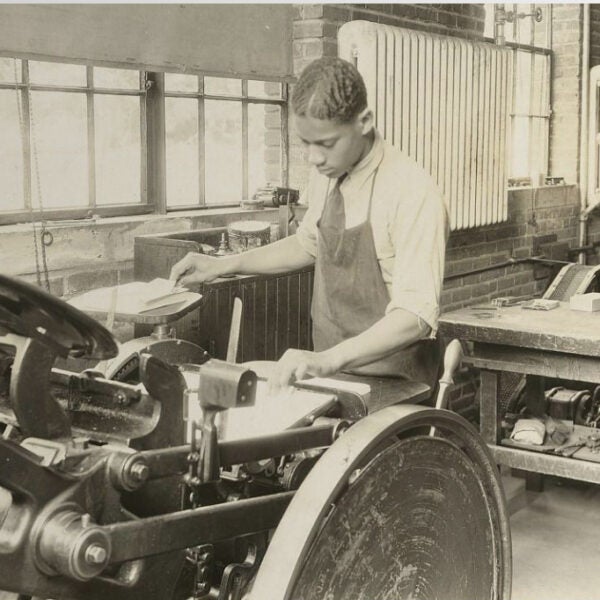
Lewis Wickes Hine. Untitled/. ca. 1935. Part of Open: Smithsonian National Museum of African American History & Culture, Artstor.
Start exploring
Learn more about publisher collections
Tell us which presses you’re curious about—we’ll share details to help you find the right fit.